How Can Osteopathy Help with Headaches?
How Osteopathy May Help with Headaches | Rugby Osteopathic & Sports Injury Centre
Discover how osteopathy may help headaches linked to neck tension, posture and muscle strain, and learn when a headache needs medical attention.
Headaches are extremely common, but that does not mean you should simply put up with them. They can affect your concentration, sleep, work and enjoyment of everyday life. Some people experience an occasional headache after a stressful day, while others find that the problem returns week after week.
There are many different types and causes of headache. Some may be associated with tension in the muscles and joints of the neck, shoulders or upper back. In these cases, an osteopathic assessment may help identify physical factors that could be contributing to your symptoms.
What can cause a headache?
Headaches can have many possible triggers, including:
- Stress and fatigue
- Dehydration or missed meals
- Eyestrain and prolonged screen use
- Poor sleep
- Changes in caffeine intake
- Migraine
- Tension in the neck, shoulders or jaw
- Reduced movement or irritation in the joints of the neck
- Working in one position for long periods
- Overuse of pain-relieving medication
Because the causes vary, treatment should never take a one-size-fits-all approach. An osteopath will ask about the pattern of your headaches, your general health and any associated symptoms before deciding whether osteopathic care is appropriate.
What are tension-type and neck-related headaches?
A tension-type headache is often described as a pressing or tightening feeling, sometimes like a band around the head. It commonly affects both sides and may be accompanied by tight or tender muscles around the neck and shoulders.
A neck-related, or cervicogenic, headache is thought to arise from structures in the neck. The discomfort may begin around the upper neck or base of the skull and spread towards the forehead, temple or area behind an eye. Neck stiffness, restricted movement or discomfort after sustained postures may also be present.
These symptoms can overlap with migraine and other headache conditions. This is why a careful assessment is important rather than assuming that every headache comes from muscular tension or posture.
How may osteopathy help?
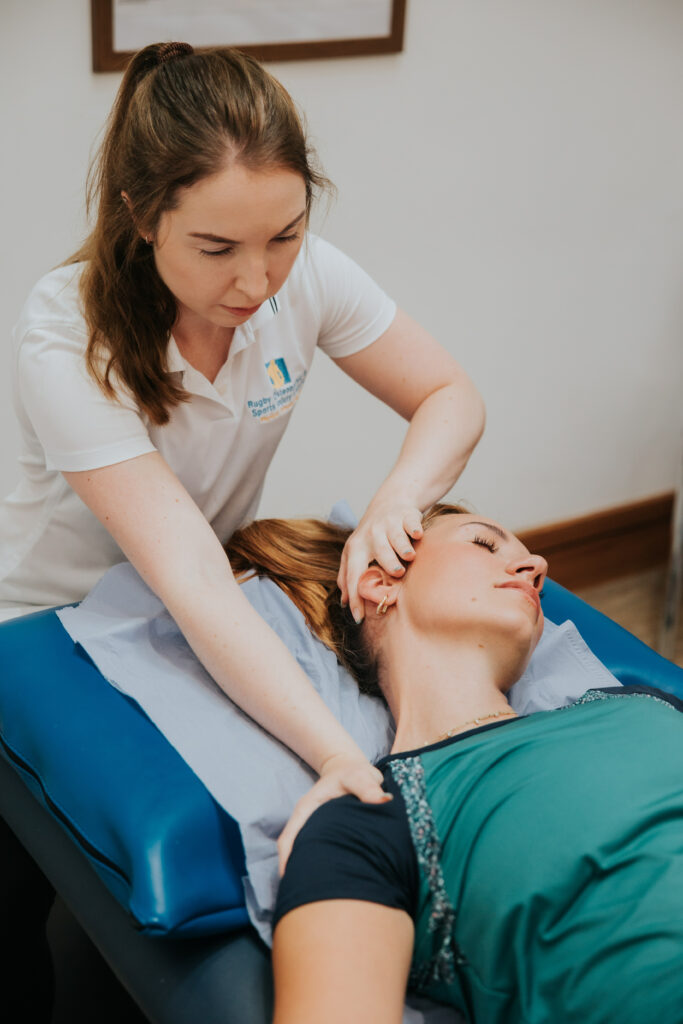
Osteopathic treatment aims to improve the way the body moves and reduce unnecessary strain. Where appropriate, treatment may focus on the neck, upper back, shoulders and jaw.
Depending on your assessment and preferences, an osteopath may use:
- Gentle joint mobilisation to improve movement in the neck and upper back
- Soft-tissue techniques for tense or sensitive muscles
- Stretching and articulation techniques
- Advice about desk setup, posture and regular movement breaks
- Simple exercises to improve mobility, strength and control
- Guidance on sleep, hydration, stress and other potential headache triggers
Treatment is tailored to the individual. Your osteopath should explain what they have found, discuss the available options and obtain your consent before treatment begins.
Osteopathy cannot treat every cause of headache and should not replace medical care for migraine, cluster headache or an underlying health condition. If your symptoms do not appear suitable for osteopathic treatment, you may be advised to contact your GP, NHS 111 or another healthcare professional.
What happens at your first appointment?
Your osteopath will begin by asking about your headache, including:
- Where the pain is felt
- How often it occurs and how long it lasts
- Whether it is pressing, throbbing or sharp
- Possible triggers
- Associated symptoms such as nausea, visual changes, dizziness, numbness or weakness
- Any recent injury or change in your health
- Medication you are taking
They may then assess the movement and function of your neck, upper back, shoulders and jaw, as well as considering posture and other relevant areas. If treatment is appropriate, your osteopath will discuss a plan based on your findings and goals.
Keeping a headache diary can be useful before your appointment. Record when each headache starts, how long it lasts, its severity, any other symptoms, possible triggers and any medication taken.
Things you can try at home
Alongside appropriate professional advice, the following may help reduce common headache triggers:
- Drink regularly throughout the day
- Avoid skipping meals
- Take frequent breaks from screens and prolonged sitting
- Adjust your workstation so that you are comfortable and supported
- Keep a consistent sleep routine
- Build regular, comfortable movement into your day
- Use relaxation or breathing exercises to manage stress
- Keep a diary to identify recurring patterns
If you use painkillers frequently, speak to a pharmacist or GP. Regular use can sometimes contribute to medication-overuse headaches.
When should you seek medical help?
Most headaches are not serious, but some require medical assessment. Call 999 or go to A&E if a headache is sudden and extremely painful, follows a significant head injury, or occurs with symptoms such as weakness or numbness, difficulty speaking, loss of vision, a seizure, confusion, marked drowsiness, or a very high temperature with a stiff neck or non-fading rash.
Contact NHS 111 or your GP urgently if a severe headache occurs with jaw pain when eating, a sore scalp, blurred or double vision, vomiting, or is triggered or worsened by coughing, sneezing, bending down or exercise. You should also speak to your GP if headaches keep returning, are becoming worse, or are difficult to control.
Could osteopathy be suitable for your headaches?
If your headaches seem to be associated with neck stiffness, muscular tension, stress or prolonged desk work, an osteopathic assessment may help you understand whether there is a musculoskeletal contribution.
At Rugby Osteopathic & Sports Injury Centre, we take time to understand your symptoms, assess the way your body is moving and create an individual treatment and self-management plan where appropriate.
To discuss whether an appointment may be suitable, contact our reception team on 01788 560646 or email [email protected].